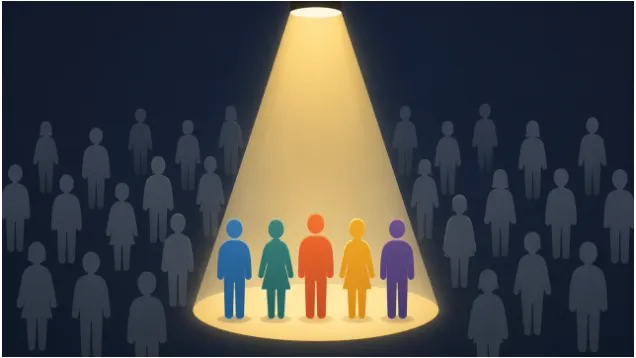
The Modality Decides Who You Reach
The most consequential commercialization decisions I see in this industry are almost always disguised as scientific ones.
They happen at the bench, years before any clinical readout. They get made on mechanism, durability, IP, and competitive landscape. The room is scientific. The frame is scientific. And the decision quietly determines, more than any choice that follows, who the therapy will ever actually reach.
The modality is the choice. And the modality decides who you reach.
I have been thinking about this watching the sickle cell launches.
Casgevy and Lyfgenia were both approved within the same week at the end of 2023. Two genuinely curative one-time gene therapies for a serious chronic disease. The science behind both is extraordinary, and I do not say that lightly. The price tags are 2.2 and 3.1 million dollars. And the launches have been a more complicated story than the science deserved.
Vertex reported 64 patients treated with Casgevy in all of 2025. Bluebird's Lyfgenia numbers are in a similar range. Tens of thousands of patients are eligible. The vast majority remain untreated.
Reimbursement alone is not the bottleneck. CMS launched the Cell and Gene Therapy Access Model in 2025 to address exactly this concern, and 33 states are now participating. Major insurers and Medicaid cover both therapies.
The bottleneck is what the therapy asks of the patient.
Both Casgevy and Lyfgenia require myeloablative conditioning, which is a course of high-dose chemotherapy to clear the bone marrow before the edited cells are reinfused. That is months of treatment, real fertility risk, and time spent at a qualified treatment center. For a working adult with a chronic painful disease who has already navigated decades of managing it, that profile is one many people simply cannot say yes to. The commercialization system was decided years earlier, when the ex vivo approach was chosen.
This is exactly the moment to watch what is happening in vivo.
Editas ended its ex vivo program in late 2024 and pivoted the entire company toward in vivo gene editing for sickle cell. Beam is generating strong ex vivo base editing data and developing in vivo delivery as the next-generation approach. The targeted lipid nanoparticle systems that would deliver these edits directly to hematopoietic stem cells in the body, without apheresis, without conditioning, without a treatment center, are still preclinical. The industry is investing heavily in engineering around these constraints. The commercialization system Casgevy was built on is already being engineered around.
The Stargardt story is the same dynamic, earlier in the timeline.
Among the companies pursuing Stargardt today, three very different modality approaches stand out. One is building one-time gene therapies to correct the underlying defect. Another is using RNA editing to fix the message at the RNA level. City Therapeutics, which closed a 99.5 million dollar Series B last week, picked RNAi to knock down a liver protein called RBP4 that carries vitamin A to the eye. In Stargardt, that vitamin A delivery process malfunctions and the byproducts damage vision. City silences the courier.
One-time gene therapy. RNA editing. Twice-yearly subcutaneous injection. Same disease. Three completely different commercialization systems already being built while the science is still being proven.
Andy Orth, who runs City Therapeutics, is one of very few executives in this industry who has personally built launch infrastructure for two different modalities. He led the U.S. launches of Onpattro, Givlaari, and Oxlumo at Alnylam, which were the first three RNAi therapies ever to reach patients. He then went to Krystal Biotech and launched Vyjuvek, the first redosable topical gene therapy. When he told BioPharma Dive last week that the technology is proven enough that the team can get excited about the biology and stop worrying about the mechanism, that statement carried operational weight. The next decision in a modality like this is no longer whether the science works. It is what the commercialization system will have to look like once it does.
This is what I mean when I say access is a design choice. By the time a patient hears about any of these therapies, whether they can realistically get one was shaped at the point someone picked the modality.
The biology gets funded. The system decides who the science reaches.
The companies that escape Commercial Gravity are not smarter than the ones that do not. They are earlier. And they build the systems before they need them.
